Cross stitch pattern for beginners: choose your first project
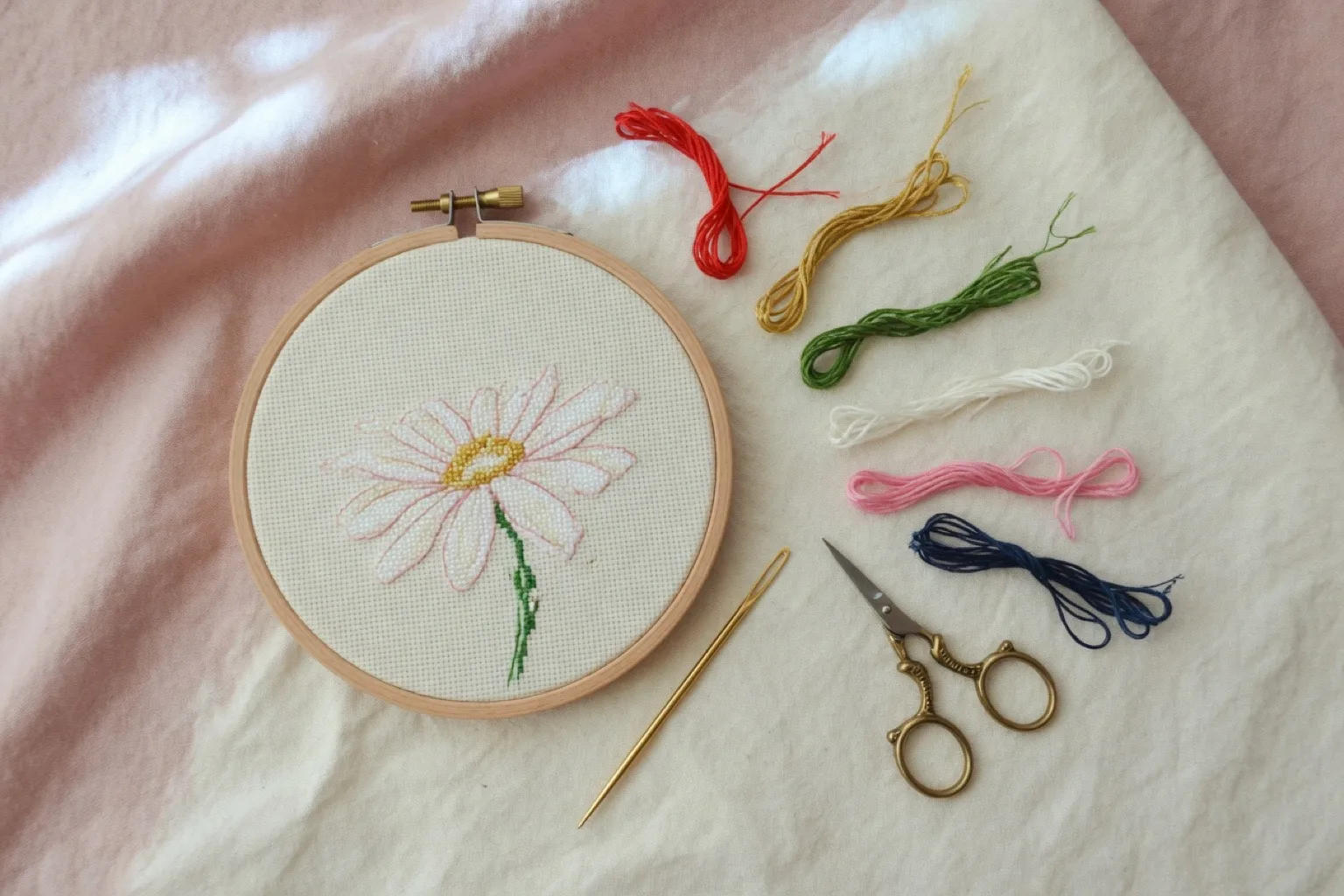
Your first pattern teaches you how to count, keep tension even, change colors, and follow a symbol chart. The right project makes those skills feel satisfying instead of overwhelming. Use the checklist below before buying fabric or cutting thread.
The beginner pattern checklist
| Pattern detail | Good first choice | Avoid for now |
|---|---|---|
| Stitch count | 40 to 80 stitches wide | 150 stitches or more |
| Thread colors | 10 to 20 colors | 30 or more colors |
| Color layout | Large connected areas | Many scattered single stitches |
| Stitch types | Full cross stitches | Many fractional stitches and knots |
| Backstitch | None or simple outlines | Dense lettering and tiny detail |
| Chart | Large, distinct symbols | Tiny or similar symbols |
| Fabric | 14-count Aida | Very fine linen or dark fabric |
Why stitch count matters more than printed size
Patterns are measured in stitches, while fabric is measured by count. The same 70-stitch design is 5 inches wide on 14-count Aida and about 3.9 inches wide on 18-count Aida. The design contains the same number of stitches either way, but the finer fabric makes every stitch smaller and harder to see.
For a first project, 14-count Aida is a forgiving choice. Its regular holes make counting clear, it works with many common patterns, and two strands of floss usually provide good coverage. Use the cross stitch calculator to turn any stitch count into a finished size and safe fabric cut.
Choose blocks of color, not confetti
Confetti stitches are isolated stitches surrounded by other colors. They can create beautiful photo-realistic detail, but they require constant thread changes and careful counting. A beginner pattern with connected color areas lets you build a rhythm and spot mistakes sooner.
Look closely at the chart preview, not only the finished artwork. If each area contains dozens of unrelated symbols, save that design for a later project. Flowers, simple animals, bold lettering, geometric motifs, and small seasonal ornaments often make approachable first patterns.
Make sure the chart is easy to read
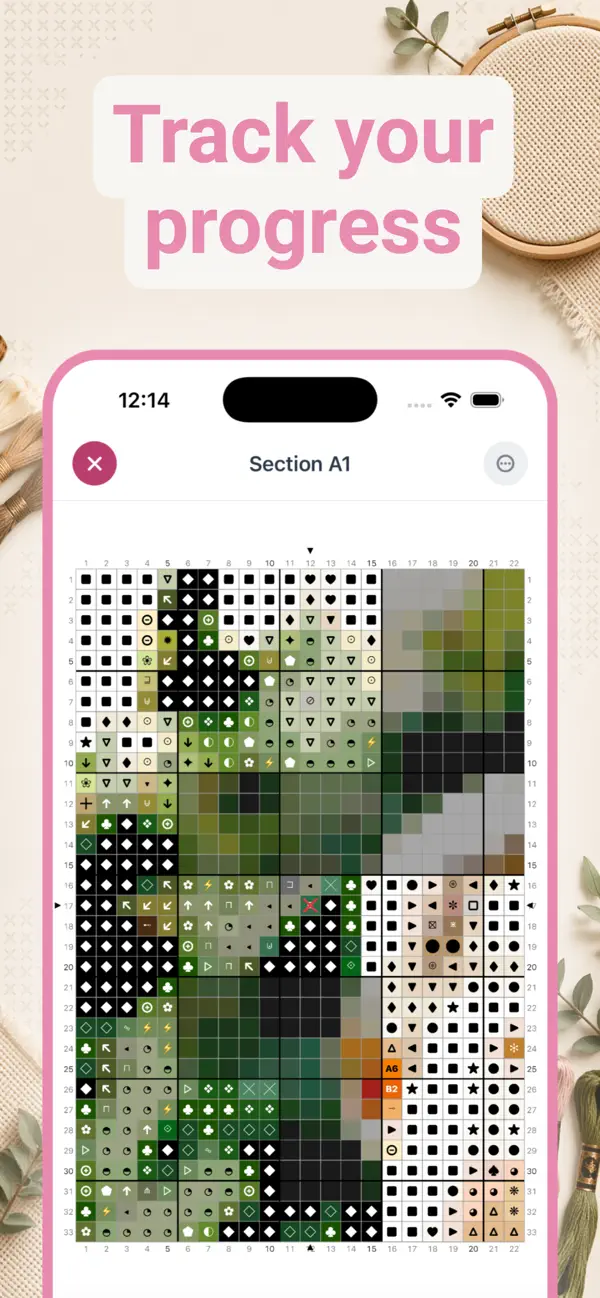
A beginner-friendly chart should do more than look attractive. It should help you recover your place whenever you put the project down.
- Bold grid lines every ten stitches make counting faster.
- Row and column numbers help you check your position.
- Center arrows show where the middle of the design begins.
- Distinct symbols separate colors that look similar on screen or paper.
- A complete legend maps every symbol to an exact thread code.
If any of these pieces are unfamiliar, read the detailed guide to reading a cross stitch pattern before making your first stitch.
What you need for your first pattern
- The pattern and its thread legend.
- 14-count Aida cut with at least 2 inches of margin on every side.
- The listed embroidery floss colors.
- A size 24 tapestry needle as a common starting point for 14-count Aida.
- An embroidery hoop large enough to hold the area comfortably.
- Small scissors and a washable fabric marker if you want to mark the grid.
Do not buy every possible accessory before you know what you enjoy. A simple hoop, needle, fabric, floss, and readable chart are enough to learn.
How to start the pattern
- Find the center of the chart. Follow the arrows printed along its top and side edges.
- Find the center of the fabric. Fold the fabric in half horizontally and vertically, then lightly crease the meeting point.
- Prepare the thread. Cut a manageable length and separate two strands for full stitches on 14-count Aida.
- Make the first row. Work the lower diagonal of each stitch in one direction, then return with the upper diagonal.
- Keep every top stitch consistent. All upper diagonals should lean the same way.
- Check your count often. Compare your work with nearby grid lines before moving to a new area.
Five first-project mistakes to avoid
- Starting too close to an edge: calculate the fabric cut and keep framing margin around the whole design.
- Using long thread lengths: long floss tangles, wears thin, and makes tension less consistent.
- Pulling too tight: let each stitch sit flat without distorting the fabric holes.
- Carrying dark thread too far: long strands behind the fabric can show through lighter areas.
- Waiting too long to recount: check each small section before one missed square shifts an entire motif.
Can your first pattern be custom?
Yes, as long as you keep the same beginner limits. Crop a photo to one clear subject, use a grid no wider than about 80 stitches, and reduce the palette to 20 colors or fewer. A cross stitch pattern maker can match the result to real DMC colors and show the chart as symbols instead of forcing you to guess thread shades.
StitchCraft lets you create up to three patterns per day for free on iPhone and iPad. You can also start from a blank grid if a simple letter, icon, or geometric motif feels easier than converting a photograph.
Frequently asked questions
What is a good cross stitch pattern for a beginner?
A good first pattern is about 40 to 80 stitches wide, uses 10 to 20 colors, contains mostly full cross stitches, and has clear blocks of color instead of many isolated stitches. The chart should have large, distinct symbols and a complete thread legend.
Is 14-count Aida good for beginners?
Yes. Fourteen-count Aida is a common beginner choice because its holes are easy to see and count. A pattern 70 stitches wide finishes at 5 inches on 14-count fabric, before adding margins.
How many strands of floss should a beginner use?
Two strands of six-strand embroidery floss are commonly used for full cross stitches on 14-count Aida, while one strand is common for backstitch. Follow the instructions supplied with the pattern when they specify something different.
Where should I start a cross stitch pattern?
Many beginners start in the center. Find the center arrows on the chart, fold the fabric in half in both directions, and begin where those center points meet. This keeps the design centered with enough fabric around every side.
Can a beginner make a custom cross stitch pattern?
Yes. Keep the first custom pattern small, crop to one clear subject, and limit the palette. StitchCraft can generate a pattern from a photo or let you draw on a blank grid, then match the design to real DMC thread colors.